
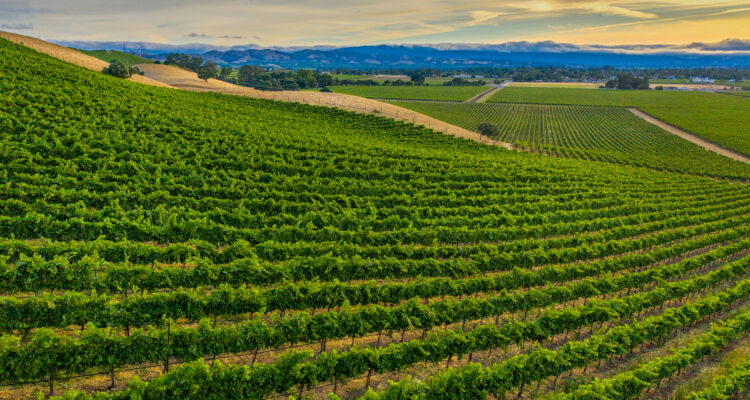
There has been a downturn in the wine industry over the course of the last couple of years.
There are some plausible reasons, such as the younger generation seems to be more mocktail drinkers, and there is also the legal use of marijuana that many have turned to for recreational usage.
Recently I had a chance for a question-and-answer session with Brandi Lombardi, the Executive Director of the Livermore Valley Wine Community, and talk about the emerging efforts for the Tri-Valley to a destination known for its Cab Franc production.
The move may help the region become a destination location, much the same as the Napa Valley for Cabernet Sauvignon and Paso Robles for Rhone varietals and Zinfandel.
The quality of wine has improved greatly over the last 20 years in the Tri-Valley, and the area is benefiting from that. As lodging options also have improved, the Tri-Valley is on the verge of becoming a popular wine destination.
Following is the question/answer with Lombardi.
How would you describe Cab Franc to someone?
Cabernet Franc is a beautifully balanced red wine. Winemakers in Livermore produce a range of styles.
How did the decision to promote/market Cab Franc come to be?
The decision came out of both history and forward-looking strategy. Cabernet Franc has been planted in the Livermore Valley since the 1880s, and early winemakers recognized its potential here. More recently, growers and winemakers looked at what the valley does exceptionally well and where we see long-term success. In 2025, the Livermore Valley Wine Community officially named Cabernet Franc, along with Sauvignon Blanc, as the region’s signature varietals because of their deep historical roots and their strong performance in our climate.

I don’t know of any other region that bills itself as a Cab Franc destination – are there any?
Very few regions have formally embraced it as a defining grape the way Livermore Valley is now doing. New York and Virginia, among others, are championing the grape as well. In Livermore, our goal is to create a clear identity around Cabernet Franc so that when wine lovers think about the varietal in California, Livermore Valley is one of the first places that comes to mind.
Is the soil here strong for Cab Franc?
Yes, the agronomic conditions in Livermore Valley are very well suited to Cabernet Franc. A study from University of California, Davis found that Cabernet Franc and Sauvignon Blanc are particularly well positioned for long-term success in the valley because of our climate, soil, and irrigation conditions. The valley’s warm days and cooling influences from the nearby San Francisco Bay allow the grape to ripen fully while still maintaining acidity and aromatic complexity.
Tell me about the formation of the Cab Franc Guild?
The Cab Franc Guild formed as a collaboration among Livermore Valley wineries that share a commitment to elevating the varietal. The idea is to collectively promote Cabernet Franc through tastings, education, and storytelling about the grape’s deep roots in the valley. It’s really about bringing producers together around a shared vision of establishing Livermore Valley as a destination for this varietal.
How many wineries were initially making Cab Franc?
Cabernet Franc has been growing in the Livermore Valley for well over a century, and a number of wineries have long included it in their portfolios. Over time, more producers have embraced the grape, and today many wineries in the region make a Cabernet Franc. Over time and vineyards are replanted, we expect that number to continue increasing.
Are there going to be big Cab Franc events in the area?
Yes. The Livermore Valley Wine Community as well as The Cab Franc Guild will continue to promote the varietal through tastings, educational programming, and consumer events that highlight the diversity of Cabernet Franc produced across the Livermore Valley. There is also a standout event called CabFranc-A-Palooza by The Steven Kent Winery that showcases Cabernet Francs from wineries in Livermore and from across the world. Held each May, wineries come together to showcase their Cabernet Francs and give visitors the opportunity to experience the range of styles.
What’s the state of the wine industry in the Livermore Valley? Is the younger generation of drinkers shying away from wine to the mocktail crowd?
Like many wine regions, we’re seeing evolving consumer habits. Younger consumers may be drinking differently, but they’re also very interested in authenticity, sustainability, and experience. Livermore Valley is in a great position to connect with that audience because we’re accessible, collaborative, and deeply rooted in history while still embracing innovation.
What are the biggest challenges facing the industry?
The industry is navigating a range of challenges, including rising costs and changing consumer behavior. Climate change is also a major factor shaping the future of wine growing. That’s one reason the region has focused on Cabernet Franc and Sauvignon Blanc. We believe these grapes are particularly resilient and well suited to our conditions as the climate evolves.
Is there anything else you would like to add, either about Cab Franc or the wine industry?
Livermore Valley is one of the oldest wine regions in California, but in many ways, it still feels like a hidden gem. By embracing Cabernet Franc and Sauvignon Blanc as our signature varietals, we’re honoring our history while also setting a clear direction for the future. We hope wine lovers will come discover these wines and experience the vibrant community of wineries that makes this region so special.
By Dennis Miller